WHO KNEW WHAT WITHIN QUEENSLAND ONE HOMES?
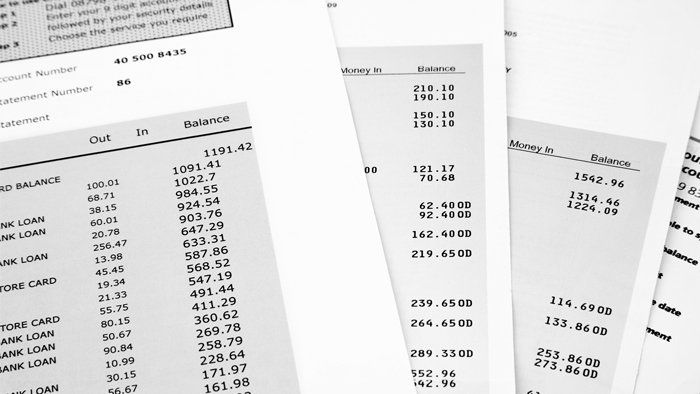
The wife of the director of Q1 Homes appeared in court in October 2019, claiming not to know anything about the hundreds of thousands of dollars moving through a joint account shortly before the building company collapsed in July 2019.
As registered liquidators who are responsible for resolving outstanding debts, it is important for Menzies Advisory to understand not only how much money a business owes but how much it has, where it is being moved from and to, and who had access to it. Therefore we listened with interest while Mrs Amber Callender, the wife of Paul Callender, the sole director of Queensland One Homes, took the stand to answer questions in relation to the money which had been moving in and out of an account which she shared with her husband.
Here is the article in full or head to the Courier Mail
to read the original article.
The wife of a failed Gold Coast builder told a court she had no idea about hundreds of thousands of dollars that went in and out of their joint account in the month before the company collapse.
Registered nurse Amber Callender, the wife of Queensland One Homes sole director Paul Callender, was questioned in a Federal Circuit Court public examination into the company’s collapse in July, 2017.
It left more than $5.8 million owed to creditors, including more than 130 tradies.
The court heard Paul Callender was on a 10-day holiday in Papua New Guinea on June 16, 2017, when $125,000 was withdrawn from the Q1 account.
Mrs Callender, who was “overlooking things’’ in her husband’s absence, said on that day she drove to Q1’s Southport office, after being told staff and tradespeople had not been paid.
“I said I needed accounts to be paid … I wrote down what I wanted to be paid,’’ Mrs Callender said.
She said she tried, but could not get hold of her husband, because he was “in the jungle’’.
Mrs Callender said she then rang the company’s “IT guy’’, telling him to meet her at the office and the company ceased operating out of those premises from that day.
“Things were going on I knew wasn’t right…Things were going on behind Paul’s back,’’ she said.
Mrs Callender said the following morning the IT guy got into the office and computer equipment was taken away in company vehicles to the couple’s property.
Mrs Callender who worked as a nurse for 16 years, said she “assisted’’ with the Q1 business in 2017 and was sole director of associated company Empire Constructions, which built homes in Queensland and NSW.
She was questioned by counsel for the liquidator about the couple’s joint Suncorp bank account and property they bought and sold.
The couple bought a Wongawallan house for about $950,000 in 2010 and after extensive renovations, completed by Q1, it was sold it in 2017 for $1.8 million, the court heard.
Mrs Callender said she could not remember the net proceeds of the sale, after the mortgage was paid, but said she got a loan for the entire $800,000 paid for their next Wongawallan property.
Mrs Callender said she did not know why $550,000 was withdrawn from their joint account on June 9, 2017.
When asked if she could explain why $181,000 was paid into their joint account on June 20 that year, Mrs Callender said: “No. News to me.’’
She said she did not know why $100,000 was withdrawn from the account on July 2, 2017.
Mrs Callender also could not explain the origin of $50,000, which was credited into their account on July 7, 2017, the day the company went into liquidation.
She said she also did not know why $150,000 also was withdrawn from the account on that same day.
The public examination is continuing.

Melbourne builder’s $12m collapse impacts 62 homes A whopping 401 creditors and 23 staff have been left in the lurch after the company suddenly collapsed. Author: Alex Turner-Cohen news.com.au Alex Turner
Menzies Advisory in Gold Coast Brisbane Melbourne and Sydney are specialist Liquidators

Menzies Advisory in Gold Coast Brisbane Melbourne and Sydney are specialist Liquidators
Registered Liquidators are experienced accountants, licenced and regulated by the Australian Securities and Investments Commission (ASIC). They are appointed to take over the running of insolvent or failed companies and oversee the final period before all affairs are finalised and the trading body is dissolved. Registered Liquidators must be appointed in the event of a Creditors Voluntary Liquidation to resolve any debts accrued by the company in the most efficient way possible. A Creditors Voluntary Liquidation (CVL) is the most common liquidation appointment type. In the event of a company entering insolvent external administration through CVL, it is the task of a Registered Liquidator to manage the finances and affairs of the body in a fiduciary capacity. After an Extraordinary General Meeting between the shareholders of a company, a Special Resolution will be passed which symbolises the instigation of the process by which the company will be wound up: liquidation. The directors, creditors and shareholders then step away from the organisation which has entered liquidation and their responsibilities are passed to a Registered Liquidator. This professional winds up all ongoing affairs which can include the collection of any outstanding debts and the disposal of company-owned assets. A Registered Liquidator must provide a document titled Consent to Act as Liquidator before they are appointed. Throughout all liquidations, the Registered Liquidator must file relevant documents with ASIC as well as providing ASIC with their yearly return. This enables the Commission to ensure only the highest quality of Registered Liquidators are operating and providing services throughout Australia. ASIC keeps a Register of Liquidators under the Corporations Act 2001 upon which every person is provided with a Registered Liquidator Number. In order to be registered, the person must demonstrate their relevant qualifications, experience, abilities and knowledge. Each registration is valid for 3 years, after which the Liquidator must reapply to maintain a valid license. All Registered Liquidators hold an accountancy degree as well as valid membership to the Institute of Chartered Accountants and/or CPA Australia. In the event of an organisation becoming insolvent, the appointment of a qualified, experienced and professional Registered Liquidator will ensure the subsequent process of winding up the company is completed correctly and responsibly. A Registered Liquidator is capable of completing this complex task efficiently and with minimal unnecessary stress to the directors and shareholders. For more information, contact Menzies Advisory Liquidators & Receivers where our Principal is a Registered Liquidator, Official Liquidator and has been a Certified Practicing Accountant for over 35 years.

Sometimes shareholders and company directors decide to cease trading despite the continued viability of the company. When this decision has been made, it is best to bring in external administrators to complete the Members’ Voluntary Liquidation process. By hiring qualified and experienced professionals, the process of finalising all company affairs, deregistering your company and the distribution of remaining funds amongst shareholders will be completed in a timely, commercially beneficial and legally correct fashion. While the terms ‘administration’ and ‘liquidation’ are most often associated with insolvent companies, it is also possible for the affairs of solvent companies to be wound up in this matter. There are various reasons why a business may choose to wind up rather than be sold as a going concern or continue trading. These include: Redistributing capital tax free Restructuring a company Business is no longer trading/required Bringing a company to its legal end – once deregistered it cannot be reinstated When a reason is decided upon, the majority of directors are obliged to sign a Declaration of Solvency form, stating the company is in a position to pay all existing debts within the upcoming year. Dormant companies may also be deregistered through this external administration process. Winding up a solvent company through external administration is easier and simpler than an insolvent company because, by definition, the company is in a position to repay any and all outstanding debts. 75% of company members are required to vote in favour of bringing in an external administrator at a meeting in regards to the Special Resolution. Once a company has entered the Members’ Voluntary Liquidation, the company can begin to be wound up by an external administrator. The appointed administrator will meet with any creditors and take care of any legal paperwork with the court, government and ATO. Once a company has been wound up, the remaining value of the assets can be distributed among shareholders. At this point the company will be legally deregistered. The external administrator is, by definition, independent and impartial. Their sole task is to preserve the company’s assets, comply with all legal obligations and return all funds to creditors and/or shareholders. Therefore, the external administrator cannot be someone with a conflict of interest or some form of duty within the company itself. Impartiality ensures the correct protocols are followed and the liquidation is completed in compliance with all laws. If you are considering placing your solvent company into voluntary external administration, contact Menzies Advisors today and find out more about how our expert liquidators and administrators can help wind up your company as quickly and commercially successfully as possible.

Menzies Advisory in Gold Coast Brisbane Melbourne and Sydney are specialist Liquidators

Menzies Advisory in Gold Coast Brisbane Melbourne and Sydney are specialist Liquidators

Menzies Advisory in Gold Coast Brisbane Melbourne and Sydney are specialist Liquidators

Menzies Advisory in Gold Coast Brisbane Melbourne and Sydney are specialist Liquidators

Menzies Advisory in Gold Coast Brisbane Melbourne and Sydney are specialist Liquidators